Hauptinhalt
The Future of Building Peace
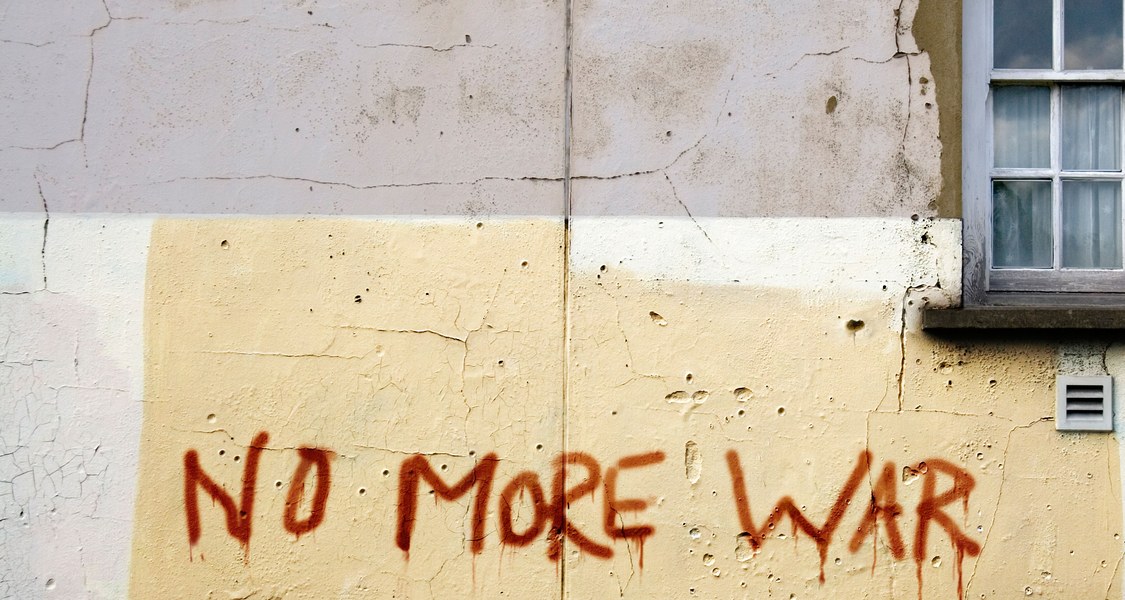
The world is experiencing rising levels of violence, with ongoing wars and geopolitical tensions challenging established approaches to peacebuilding. Meanwhile, institutions and norms associated with the liberal international order are facing increasing opposition, raising fundamental questions about how peace can be understood and pursued in the future. This conference examines how peace is conceptualised, negotiated and practised in conditions of global instability and transformation. Bringing together scholars of peace and conflict studies and related disciplines, it encourages reflection on emerging challenges, evolving responses, and the future of peacebuilding.
Key questions include: How can peace be established amidst geopolitical tensions, shrinking civic and academic spaces, and conflicting claims to knowledge? Which actors and practices influence contemporary peace processes? And how can peace research remain relevant in an evolving global landscape? These issues are addressed through themes such as international peace and security interventions, political representation and inequality, environmental conflicts, migration and human rights, transitional justice, peace education, gender and LGBTQ+ rights, and post-colonial power relations.
Organised by the Center for Conflict Studies on its 25th anniversary, the 2026 Zentrumstage provide a platform for critical dialogue and interdisciplinary exchange on the future of peace in a contested world.
22.10.2026
2.30–4.00 pm
Vergangenheit und Gegenwart der Konfliktforschung in Marburg und Deutschland (Podiumsdiskussion)
Seit der Gründung vieler Institute und Zentren der Friedens- und Konfliktforschung haben sich sowohl die weltpolitischen Rahmenbedingungen als auch die institutionellen Voraussetzungen wissenschaftlicher Forschung grundlegend verändert. Das Panel nimmt das 25-jährige Bestehen des Zentrums für Konfliktforschung zum Anlass, um die Transformationen der Friedens- und Konfliktforschung in den vergangenen Jahrzehnten zu reflektieren und ihre zukünftigen Aufgaben zu diskutieren. Im Mittelpunkt stehen Fragen nach dem Verhältnis von wissenschaftlicher Wissensproduktion, institutionellen Strukturen und politischen Kontexten. Wie haben sich veränderte geopolitische Konstellationen auf Themen, Methoden und Selbstverständnisse der Friedens- und Konfliktforschung ausgewirkt? Welche Folgen hatten diese Entwicklungen für das Forschungsfeld insgesamt und für die institutionelle Verankerung friedenswissenschaftlicher Forschung an Universitäten? Schließlich richtet das Panel den Blick auf die Zukunft: Welche neuen Forschungsaufgaben ergeben sich angesichts globaler Gewaltkonflikte, ökologischer Krisen und gesellschaftlicher Polarisierung? Und welche institutionellen Voraussetzungen sind notwendig, damit die Friedens- und Konfliktforschung auch künftig kritisch, interdisziplinär und gesellschaftlich relevant arbeiten kann? Das Panel bringt Perspektiven des Forschungsfeldes und ehemaliger Geschäftsführender Direktoren des Zentrums zusammen, um Bilanz zu ziehen, Kontinuitäten und Brüche sichtbar zu machen und über die zukünftige Entwicklung des Feldes ins Gespräch zu kommen.
- Prof. Dr. Mathias Bös, Leibniz University Hannover, Institut für Soziologie, ehem. Geschäftsführender Direktor ZFK/CCS
- Prof. Dr. em. Ralf Zoll, Philipps-Universität Marburg, Zentrum für Konfliktforschung, Gründungsdirektor ZFK/CCS
- Dr. Thomas Held, Deutsche Stiftung Friedensforschung, Geschäftsführer
- Prof. Dr. em. Ulrich Wagner, Philipps-Universität Marburg, Sozialpsychologie, ehem. Geschäftsführender Direktor ZFK/CCS
Moderation: Prof. Dr. Thorsten Bonacker, ZFK/CCS
4.30–5.30 pm
The Future of Peace and Conflict Studies (Roundtable)
This roundtable aims to bring together collectives, initiatives, and networks working within and around the field of Peace and Conflict Studies to discuss questions of inclusion, representation, and structural change in academia. The discussion focuses on how these groups contribute to creating more inclusive academic spaces by addressing inequalities related to class, gender, race, age, hierarchy, and representation. It further explores how existing power structures and dominant epistemologies within the field are being challenged through collective action and critical engagement. This roundtable reflects on how the future of the field is imagined by the groups invited. Each individual/group will briefly present their work, experiences, and ongoing initiatives on the issue. The presentations will be followed by an open discussion on how these debates and practices can be translated into everyday academic life and institutional cultures, and how more solidaristic and inclusive spaces, and epistemological justice, within Peace and Conflict Studies can be cultivated.
23.10.2026
9.30–11.00 am
International Interventions for Peace and Security (Panel 1)
This panel explores the evolving role of international intervention in the pursuit of peace and security. It brings together perspectives on military interventions, United Nations peacekeeping missions, and international administrations, to examine how external actors attempt to stop wars, stabilise post-conflict societies, and govern transitions. Particular attention is given to large-scale peacekeeping operations and UN-led administrations, which have combined military, political, and civilian instruments of governance. The panel situates contemporary interventions within a longer historical trajectory, including the legacies of trusteeship and international oversight in the context of decolonization. Contributions also analyse the dynamics of securitization that shape how conflicts are framed and justify international engagement. The panel critically assesses the promises and limits of international intervention, asking how such practices reshape sovereignty, authority, and local political orders. By placing current debates in historical perspective, the panel aims to contribute to discussions on the future role of international actors in managing conflict and building peace.
Unequal Access to Political Power (Panel 2)
Building sustainable peace requires addressing inequalities not only in access to resources, but also in political power. A growing body of research shows that, even in economically egalitarian democracies, influence over public policy is often skewed towards the preferences of more affluent citizens. Yet we still know too little about how far these findings travel across world regions, political contexts, and institutional arenas, as well as about the precise mechanisms that bring about these inequalities. This panel brings together recent research that advances these debates. It asks whether inequalities in political voice and influence persist across different regional settings and levels of governance. The contributions examine unequal political influence not only at the national level, but also in local political arenas, where struggles over representation, participation, and distribution are often especially consequential in conflict-affected and post-conflict settings. In addition, the panel explores the role of politicians themselves, focusing on how their social backgrounds, incentives, and characteristics may contribute to unequal responsiveness and unequal outcomes.
11.30 am–1.00 pm
Environmental Conflicts: Varieties or Extraction? (Panel 3)
Environment and peace are closely linked because environmental degradation and resource extraction shape conflict dynamics, while equitable and sustainable resource governance can reduce tensions and support stable social relations. This panel brings together scholarship on agrarian change, climate research, and extractivism to rethink environmental conflicts as interconnected forms of extraction. Although studies often operate in silos—focusing on land, minerals, water, or carbon—the underlying dynamics share common drivers: global demand, resource control, and uneven development. Framing these processes through environmental conflicts highlights their shared socio-economic and ecological consequences, including dispossession, degradation, and inequality, as well as diverse forms of resistance. Four experts present empirical insights from Latin America, Northern Africa, and Europe, bridging disciplinary and regional divides. Their work shows that extractive processes are deeply entangled. The panel examines whether “environmental conflict” can provide a productive entry point for cross-field dialogue, fostering integrated and comparative approaches to global environmental challenges.
Doing Human Rights in Migrant Societies (Panel 4)
Migration and flight are often consequences of violent conflict and repression, and thus also key to seeking safety, dignity, and more peaceful futures elsewhere. This panel assesses how migrant and refugee groups claim their rights to be protected from serious harm in their home countries as residents in their host countries. The panellists pay particular attention to experiences of violence encountered by diaspora communities, both before and after migration. They tackle debates on how lawyers and activists mobilize—and interact with—human rights-related laws, policies, and everyday protests amid conflict and post-conflict contexts, as well as to their efforts to rebuild everyday forms of peace in displacement. When do human rights claims become politically vital, and how are they enacted? Under what circumstances do they generate transnational networks of peacebuilding and (transitional) justice processes? As they engage with these inquiries, the panellists reflect on the research methods they employ and the ethical questions that arise while working closely with migrant actors and communities that grapple with human rights discourses, particularly in contexts where peace remains contested, uneven, or aspirational.
2.30–4.00 pm
Postcolonial Hierarchies of Peace (Panel 5)
The panel examines the postcolonial hierarchies of peace, asking whose visions of peace are prioritised, institutionalised, and legitimised in contemporary international politics. It explores how colonial legacies continue to shape the norms and practices of peacebuilding. Particular attention is given to how current crises challenge dominant liberal peace paradigms and open space for competing conceptions of peace. The panel brings together perspectives that interrogate how global power asymmetries structure responses to conflict and peacebuilding interventions. It also examines how international organizations and legal regimes reproduce or contest these hierarchies. The objective is to illuminate emerging debates about whose peace is being built, for whom, and under what conditions. In doing so, it contributes to rethinking the normative and political foundations of building peace in an uncertain global order.
International Law, Internation Relations & the Hope for Peace (Panel 6)
In view of the fading credibility of the International Criminal Court and the decline of the liberal world order, the question of the future of international law, human rights and peacebuilding is particularly pressing. The return of geopolitical power politics is currently leading to situations in which international law is being ignored. The panel brings together international law experts and researchers who analyze the effects of current US interventions in Venezuela and the Middle East. In light of these developments, what are the prospects for a rule-based world order? How can the normative principles of human rights, the rule of law, and multilateral cooperation be strengthened? The panel offers an assessment of current developments in international law and international politics.
4.30–6.00 pm
The Future of Peacebuilding tbc - Keith Krause (Keynote Lecture)
Das ist der Text des Akkordeon-Elements. Möchten Sie ein neues Element einfügen klicken Sie bitte oben auf "Vorlage einfügen" und wählen unter Vorlagen "Accordion Element"
23.10.2026
9.30–11.00 am
(Future of) Transitional Justice and Memory (Panel 7)
This panel examines the evolving landscape of transitional justice in a period marked by shifting political, epistemic, and institutional conditions. Since the aftermath of World War II, societies have developed diverse mechanisms—such as truth commissions, criminal prosecutions, reparations programs, and memorialization initiatives—to address legacies of mass violence and state repression. While these approaches have shaped global efforts to confront past atrocities and sustain peace, recent debates seek to expand transitional justice beyond state-centric and legalistic paradigms by foregrounding grassroots mobilizations, victim-centred practices, and decolonial perspectives. At the same time, the contemporary global context poses significant challenges, including the rise of ‘post-truth’ politics, intensifying geopolitical tensions, and increasing constraints on civil society actors. This panel offers critical reflection on how these transformations affect the pursuit of peace, justice, memory, and accountability, and explores emerging theoretical and practical responses to reconfigure transitional justice in an increasingly contested global environment.
Navigating Conflict in the Classroom (Panel 8)
Education contributes to peacebuilding by shaping knowledge, values and social relations in ways that reduce conflict, foster an understanding of differences and support more inclusive and equitable societies. Currently, teaching and learning in schools and universities is becoming increasingly challenging in times of war and growing societal polarisation. This panel will explore how political and social conflicts emerge in the classroom and influence teaching and learning processes. The panel includes a presentation and discussion of the Erasmus+ funded project NAVINCLASS (Navigating Conflict in the Classroom). The project provides academic staff with practical guidelines and training modules, as well as offering students workshops. Rather than merely managing conflict, NAVINCLASS approaches it as a resource for critical thinking, perspective-taking, and cooperative problem solving. The panel will discuss this approach and other ways of engaging constructively with conflict in education, and how this may contribute to peaceful coexistence.
11.30 am–1.00 pm
Gender and Feminist Approaches to Peace (Panel 9)
In an age of violent crises, feminist and queer movements play a pivotal role in envisioning peaceful societies. This panel brings together experts working on resistance to anti-feminist mobilisations in various countries in Africa, Latin America, and Eastern and Western Europe. The aim is to discuss the local, national, and transnational conditions under which feminist mobilization for peace is taking place today. How is it possible to reshape peace, and to advocate for solidarity, care, and gender justice in times of nationalism, the threat of gender backlash, and autocratization? The panel will focus in particular on the question of how knowledge gained from research on anti-feminism can be fed back into society, and how, amid the current political climate, this knowledge can contribute to political education and the promotion of peace and democracy.
Engaging with Victims and Perpetrators (Panel 10)
This panel examines the complex and often blurred boundaries between victims and perpetrators in addressing past violence, and their implications for peacebuilding. While transitional justice mechanisms increasingly centre on victims’ rights and recognition, growing scholarship emphasizes understanding perpetrators—their motivations, trajectories, and social embeddedness in contexts of mass violence. Focusing on why individuals participate in mass killing, and what motivates victims to engage with transitional justice and reparations, the panel explores how such insights can inform sustainable approaches to accountability, reconciliation, and prevention. Drawing on case studies from Cambodia, Timor-Leste, Guatemala, Morocco, and beyond, contributions analyse the interplay between structural conditions, affective dynamics, and individual agency. The panel also interrogates how institutions and civil society engage with victims and perpetrators through trials, truth commissions, reparations, or community initiatives. By combining empirical research and conceptual reflection, it rethinks prevailing binaries and advances debates on addressing both harm and responsibility in post-conflict peacebuilding.
2.30–4.00 pm
The Future of Building Peace: Re-imagining Utopias in an Age of Crisis (Roundtable)
This closing panel addresses the role of utopian thinking in contemporary peacebuilding amid what is widely described as an era of ‚polycrisis‘. Against the backdrop of ongoing wars, violent conflicts, intensifying securitisation, and increasingly dominant security discourses, the capacity to imagine alternative futures appears profoundly constrained. Public and political imaginaries are often limited to scenarios of escalating violence, militarisation, and permanent crisis management. The panel therefore asks how utopian visions can function as critical tools for rethinking the present and opening spaces for transformative political imagination. Rather than understanding utopia as an unattainable ideal detached from reality, we approach it as a necessary practice of critique and orientation. Imagining peaceful futures enables us to challenge the status quo, overcome political paralysis, and develop strategies for action. Bringing together scholars and practitioners from different fields, the panel reflects on concrete pathways, political strategies, and transformative practices for re-imagining and building peaceful futures.